Things About Work I Wish I Knew Earlier – Part 4

Part 4 of “Things About Work I Wish I Knew Earlier” continues the line of thinking from my the previous three posts (links to each post are below) and focuses primarily on staying under the radar at work and not getting noticed for the wrong reasons.

Starting this line of posts with a sequence of what not to do may seem a bit negative.  However, there is a method to my madness.  I have learned that it is extremely important to build a bank of positive impressions at the outset of a career or new job.  Negative impressions are remembered more than positive ones, and negative impressions are much more difficult to eliminate.  You want to build up a reservoir of positive results so that, when you screw up (and you will screw up), people say something like “wow, that’s unusual for Fred.”  If the reservoir isn’t deep enough, then a screw up will immediately eliminate all the positive.  The workplace is very unforgiving.

#4 Don’t offer suggestions unless you are asked.

There are really only two types of suggestions — 1) do something differently than is being done now and 2) do something else that isn’t being done now.  I also stipulate that, if you are making a suggestion, you are making it to someone else who is doing something that isn’t your responsibility.  You don’t really offer suggestions to yourself.  Suggestions or guidance you give to your own team are different and are excluded from this.

The truth is that when you make a suggestion to anyone, you are telling them they are doing something wrong.  You may try to be tactful.  You may sugar-coat your comment.  You may think you have a lot of goodwill with that person.  However, at the root of your suggestion is that the person or group is doing something incorrectly or, at best, less efficiently than possible. If we take that a step further, a suggestion is telling someone that they are stupid or they don’t know what they are doing.

It doesn’t matter if you are right .  Let me repeat that.  It doesn’t matter if you are right.  Telling someone they are wrong or stupid, no matter how tactful, is risk-seeking, not risk-averse.  It’s putting yourself on their radar unnecessarily.

If someone asks you to proofread a paper, look at a spreadsheet for errors or review a process with them, then jump right in.  If you see a flaw in a spreadsheet that could result in lost profits, missed budgets or miscast financial statements, then raise your hand.  If you believe steps someone is taking might break the law, you should also chime in.  I’m sure there are other exceptions as well.

Follow this advice.  Don’t offer suggestions and stand back and watch.  You’ll notice that work gets done, although perhaps not as efficiently as you think it should. You’ll see people come through at the last minute, which is not a work cadence you follow.  You’ll see a boss understand the problem and step in to correct it, but perhaps not as fast as you would have.  You’ll also see bosses agree to push back deadlines or change deliverables, which you may find embarrassing.

It’s amazing how things work out.  Really.  And if the customer or client is happy and the boss is happy, then all is well.  By not offering suggestions on changes, you have avoided a negative perception among others.  If you have delivered on your work and contributed to the success, then you have just added to your positive reservoir.

Offering suggestions to others proactively only has downside.  You want to establish a track record of success so that people come to you and ask for your suggestions.  That should be your goal.  This is all about getting others to put you on the radar for the right reasons and avoiding the radar yourself for the wrong reasons.

When I told Mrs. Spidey about this post, she smartly pointed out how this approach has worked on TV reality shows.  Isn’t it always the outspoken ones on Survivor or Apprentice or Big Brother or even the Bachelor than end up getting booted out first?  The ones that contribute, do their job, don’t fail, and don’t make waves are the ones that “suddenly” show up with the $1 million.  If my examples don’t resonate for you, perhaps this comparison does.

Next week, we’ll talk about volunteering for stuff.  Since you’ve read all the way to this point, you probably know where I’m headed.

—————————————-
Previous parts:

#1 Don’t Complain or Make Waves
#2 Don’t Talk Negatively About Anyone Behind Their Back
#3 Don’t Ask Questions in Large Meetings

I Like GIFSoup, But I Can’t Praise It Just Yet

For this week’s “Other Sites I Like Post” I want to tell you about GIFSoup (www.gifsoup.com).  Not unlike Graphjam, which I wrote about two weeks ago, GIFSoup is just plain fun.

(I want to give a nod to my friends at Japers’ Rink who introduced me to GIFSoup.  Thanks guys!)

Unfortunately, despite the capabilities that I describe below, which are pretty neat, GIFSoup continues to have problems that prevent me from really praising and recommending it.  I’ve delayed this post for about 24 hours, hoping that the site would get back to being functional.  It hasn’t.  That is unfortunate.  Googling a bit showed me that the site has had problems before on more than one occasion.

For any that don’t know, “GIF” stands for graphic interchange format, which was introduced by Compuserve in 1987 to display pictures.  In the 1990s, Netscape introduced the ability to animate a GIF and show motion in the picture.  For more on GIFs than you ever want to know, visit this Wikipedia article.

GIFSoup provides a service that allows any user to create an animated GIF from most YouTube videos.  It does not allow private YouTube videos to be used.  However, you can make a personal video temporarily public, copy it over, and then make it private again.  The animated GIF repeats an action sequence in an infinite loop.  Once you’ve created the animated GIF, it can be used as a static picture would.  It can be pasted in presentations, in emails, on message boards, blogs, etc.

GIFSoup offers two services.  The free services allows each user to create 100 animate GIFs up to 15 seconds long each.  Each GIF created for free also carries the GIFSoup watermark.  For $2.95 per month, users can create unlimited animated GIFs up to 25 seconds long each without a watermark.  Based on the site’s problems, I wouldn’t make the $2.95 per month investment just yet.

Creating an animated GIF on GIFSoup is very easy.  Once you find the YouTube video from which you want to create the GIF, you paste the URL (the web address) into a box on the home page and click “Create GIF.”  The video loads and you are taken to the next page, where you can view the full YouTube video and select the starting and end points for your animated GIF.  GIFSoup also allows you to preview your sequence and modify before saving.

When the site worked, I had some fun with GIFSoup before writing this post, and I created four animated GIFs.  They are all sequenced below.

Marcia Gets Hit in the Nose by a Football

Jordan Beats the Cavs

Keep in mind that GIFSoup has its share of problems.    So, as cool as it is, be ready for the frustration.  Unfortunately, it is the only site of its kind that I can find and, when it works, it is great.

———————-

UPDATE — Frustrations aside, two days later, I was finally able to upload a video of my son on the Flow Rider on Royal Caribbean’s Freedom of the Seas from YouTube and made an animated GIF.  Again, because the site was up and functioning, it took all of a few minutes.  I also noticed this time that GIFSoup allows each user to make their GIFs private.  As noted above, once I created the animated GIF, I was able to go back to YouTube and make my video private there as well.

Here’s what I created:

The Flow Rider on Freedom of The Seas

Trip Report – Aria Hotel and Casino at City Center in Las Vegas

Tuesday night, Mrs. Spidey and I returned home from four nights at the Aria Hotel & Casino at City Center in Las Vegas.  We arrived on Friday evening and left on Tuesday afternoon.  I posted already about our discovery of the Buffet of Buffets, so I won’t rehash that here.  In this post, I’ll stay focused on the hotel itself.

Our Room

We stayed in a Corner Suite on the 8th floor.  We were disappointed by the low floor, but that was actually better than their first proposal of the 5th floor.  I think we’ve learned our lesson about arriving at 7pm on a Friday evening in the summer.  Most of the high floors were already taken.

The Corner Suites are local at the far ends of the hallways – literally as far as you can walk, a good three to four minutes from the elevators.  They are 920 square feet and consist of a small entry way, a powder room, a sitting room, a bedroom, and a bathroom.

The sitting room had a small bar area that included both the mini-bar with items to purchase and any empty fridge for your own water.  Be careful, as this is one of those mini-bars where just lifting an item can result in a charge.  Examine your bill carefully, as we were billed for some chocolate almonds we never ate.  We used the mini-fridge to store a 12-pack of Diet Coke we bought at a CVS just out on the Strip.  The sitting room also has a desk, a couch and chair, and what appeared to be about a 50-inch HDTV.  The bedroom had a king-sized bed and a smaller HDTV.  The bathroom had two sinks, separate shower and tub, and a separate commode, which included a “washlet” toilet.  More on that in a later post.  There is also a television in the bathroom.

The Sitting Room in the Aria Corner Suite 8125

One of the room’s signatures is the way the curtains, lights, temperature and television are all controlled by a master handheld at the side of the bed and on the television.  Curtains and lights can also be controlled on the wall in several locations.  We found this interesting, but not the easiest system to use.  The curtain buttons on the walls are not labeled.  As a result, it’s not clear which control controls which curtain until you see what moves when you press a button.  In addition, the controls on the television remote are a bit sticky.  Sometimes you click up or down to go to another item and sometimes you click sideways.

The Room Controls on the Bedroom TV

The other signature is the floor to ceiling windows of the Corner Suite.  Although our view was more limited from the eighth floor, the windows and views didn’t disappoint.  There were great views from bedroom, bathroom, and sitting room.

The Tub in Aria's Corner Suite with a View of the Strip

The View from Corner Suite Bedroom Including the City Center Tram and the Rio

Because we had a suite, we were given newspapers every morning, and the wireless internet was free for up to four devices.  We had two laptops and an iPhone connected.  If you are in a regular room, the WiFi costs $15 per day.  Remember this when you compare rates.

Things we liked – separate sinks, a desk outside the bedroom, three televisions, the windows (for the view and for the light), the available mini-fridge, the ease of connecting to WiFi, the 2:30pm checkout time upon request, the quality of the housekeeping, and the washlet toilet.

Things we didn’t like — the pillows (too smushy and not enough), the slippery floor of the shower, the complexity of the electronic controls, and the slow draining sinks..

The Casino

Mrs. Spidey and I play machines, not tables.  From what we saw there was plenty of variety among the tables, and I clearly saw $10 blackjack tables mid-day.  The video poker machines were relatively basic and standard.  We saw few of the newer machines that allow multiple bets and multiple hands.  The slot machines did seem to be among the newer machines, including Amazing Race machines, Monopoly machines, and Sex and the City machines.  Compared to other hotels we visited, the Aria Casino definitely has a newer feel to it and, in that way, is like the Bellagio, Wynn and Palazzo.  Places like Monte Carlo, Harrah’s and the Flamingo have a much cheaper, outdated feel.  Mrs. Spidey turned $100 into $300 on dollar video poker.  I won periodically on the slots, but Mrs. Spidey was the winner in the family.

While you are in the casino, don’t forget to sign up and use an MGM Mirage Players Club card (now called M Life), even if you only play machines.  We played for four days and ended up getting a combined $23 in free play and $50 off our bill.  Get the card, play, and then visit the desk to ask for the comps.  They won’t come automatically.

The Pool and Spa

The Aria pool is nothing fancy.  There are two pools there, plus the Liquid Pool, which explodes on the weekend with a young crowd.  I have not seen so many people in such a small wading pool.  There appeared to be enough lounge chairs and plenty of umbrellas at the main pools.  It was not difficult to find a waitress, and there were cups and a jug of ice water for anyone to have.

We visited the spa/gym twice.  Each visit was $30, but there is a 3 days for $80 deal as well.  The $30 gives you access to the gym and the locker room areas.   The gym had plenty of weights and cardio equipment.  The treadmill on which I ran had an adapter for my iPhone.  Once I plugged in my iPhone, I was able to listen to music or play videos from my iPhone on the television screen.  The machine was also compatible with the Nike+ iPod app and automatically recorded my workout.

The spa was very comfortable and well-appointed, second in my opinion only to the Wynn.  The spa has a sauna, a steam room, three hot whirlpools and one cold plunge pool.  There are ample towels and the robes are comfortable.  There are plenty of grooming supplies from Q-tips to disposable razors to shaving cream to hand lotion.  Both times I worked out, I spent more time up in the locker area than in the gym, relaxing on a lounge chair near the whirlpool.  In fact, I wrote the Sunday post about George Steinbrenner on my iPhone sitting there.

There are two other pluses to the gym.  First, with access you get unlimited drinks – they have waters, juices, and sodas – plus fruit, tea and coffee.  Second, there is a co-ed porch overlooking the main pool.  On this porch is a small pool and a few chairs.  In theory, you could pay your $30 every day to have access to this porch.

All-in-all, I was very impressed with the gym.  It is very relaxing and a great way to stay out of the casino or, in my case, out of the heat.

I should also mention that I visited the salon for a shave.  I had never been shaved with a straight razor before.  The shave cost $75 including tip, but included facial treatments beyond the shave.  Vinnie, the barber, was very friendly and conversational, although I worried about answering him when the straight razor was moving down my neck.

The Location

City Center is located between Bellagio and the Monte Carlo, just across the street from Planet Hollywood.  You can walk inside through to the Monte Carlo and take a tram over to the backside of the Bellagio.  Aria is set back a bit, however, even in comparison to some of the other hotels.  It was about a ten minute walk from the lobby out to Las Vegas Boulevard.  We walked through the Crystals mall out to an overpass between the still under construction Cosmopolitan and Planet Hollywood.  Initially, we had some trouble finding the exit, as Crystals is still being built out, and store construction creates a few dead ends.  Once we figured it out, we were fine.  Whether we took the tram to the Bellagio or walked out to the road, it was a bit of a trek from hotel to street.  That much said, it’s right in the middle of the strip and, even in the heat, we had an easy walk back from the Palazzo one night after seeing Jersey Boys and eating dinner at Dos Caminos.

Bottom Line

The Aria is probably our second favorite hotel now behind the Wynn, although, for comparison, we’d like to stay at Bellagio one more time when the pool is open.  We feel like the Wynn’s basic room (often going for $99 in the summer mid-week) is sufficiently large with floor to ceiling windows, that we don’t need to pay for a suite to be comfortable.

Despite our challenges with the electronics, the room was indeed comfortable.  The pool was easily accessible, and we had no trouble finding machines we liked to gamble.  We only ate at the buffet and Todd English’s Public Urban Bar, but they were very good.  If we had to do it again, we’d get there a bit earlier to get a higher floor.

Pledging to Be the “Right” Parent of a High School Athlete

Just over a month ago, I posted somewhat of a diatribe about how poorly the high school ice hockey league in the St. Louis metro area is run. I’m sad to say that the issue did not resolve itself as I had hoped.

In the end, my son’s public high school will not be able to field an ice hockey team for the 2010-2011 season. Instead of allowing us to merge his school’s program with another from a nearby school, the adults that manage the league want to disperse the kids to other teams via a draft or the equivalent of free agency.

The dispute I and other parents have with the Mid States Hockey Association is a bit political.  It’s two sides with different opinions, both of which seem logical to the holder of the opinions.  I won’t rehash the argument here.  Like many political arguments, the dispute is not, at this point, resolvable.

I am able to justify the blog post and a couple of widely broadcast emails because I believe I was doing what I needed to do as a parent to support my child.  Upon reflection, however, I suspect some other parents or the leaders of Mid States didn’t perceive my actions in the same way.  I wonder if others thought I was lobbying for my son in a way that put my son above the others because my son is “special.”  That’s certainly not what I intend.  I never want to become that ugly parent of an athlete that clearly thinks his child is above everyone else.  I want to be known as a supportive, fair parent, who encourages his son to play to the best of his ability.

I pledge to be the “right” parent.  Specifically:

  1. I will make sure that my son attends every practice and every game, except for illnesses or for schoolwork problems.
  2. I will attend every game that does not conflict with other family obligations or business trips out of town.  If I cannot attend, my wife will do her best to attend.
  3. I will support the coaches’ decisions when my son complains and encourage him to raise any concerns to the coaches and not to me or his mom.
  4. I pledge not to talk to my son or yell at my son to do something in the middle of the game.
  5. I will allow the coaches to make their own strategic decisions, playing time decisions, and playing position decisions.
  6. If I want to talk with the coach, I will do so privately, but not within 24 hours after the end of a game.  This will give me time to reconsider or calm down, if I am frustrated.
  7. I will not talk negatively about my son’s teammates’ abilities.
  8. I will not denigrate the opponents loudly during the game.
  9. I will volunteer to assist the team in score-keeping, fund-raising or other role.
  10. I will make sure that all fees we owe for the team are paid.

Are these the right things to focus on?  Tell me what you think.

Does it make sense to list out these things and have all the parents sign a pledge?  Personally, I think so.

Our New Las Vegas Vacation Diet

Mrs. Spidey and I are finishing up a four-day vacation in Las Vegas. We’re staying at the new Aria hotel in City Center, and I’ll have more on that in Wednesday’s travel post.

We like Las Vegas. We’ve been here about once each year in the recent past, usually while our kids are off at summer camp.  Over the years, we’ve stayed at ten different hotels on the strip. We like sitting by the pool and relaxing. We like gambling a bit. We like the food, and we like the spas.

While we aren’t newbies and know our way around, I know we are more like the average tourist.  We aren’t high stakes gamblers, preferring slot machines over table games.  We aren’t in for the weekend from Southern California solely to party.  We don’t stay out often much past 1:00am, and, if we do, it’s because I’m in the casino playing lower denomination slots.

And, like most other average tourists, we’re watching both our bottom lines and our waist lines.  I think this year we may have figured out one easy way to do both and enjoy ourselves.

(As a quick side note – if you think you are overweight and want to feel good about yourself, come to Las Vegas.  I think all the stock footage the networks use when talking about obesity was shot here.  If you don’t think Americans, on average, needs to lose some pounds, come to Las Vegas.)

Not eating is not the answer to watching your finances and your calories.  On our trips, we have eaten at some very good and very expensive restaurants. We’ve eaten at Alex at the Wynn and Sinatra’s at the Encore. We’ve also eaten at both Capital Grille and Morton‘s here, and the restaurant up in the Eiffel Tower at Paris. We also ate at the now-closed Commander’s Palace in about 2005, when it was still at the Alladin, which has since morphed to Planet Hollywood.

Our new Las Vegas Vacation Diet has five parts:

  1. Eat a big breakfast at a buffet sometime after 9:30.  Take a few pieces of fruit or cookies with you for snacks later.
  2. Hit the hotel spa/gym in the afternoon for a workout.  (This may be the most critical step.)
  3. Snack on the free apples, oranges and drinks in the spa.
  4. Eat dinner at about 7:oo or so at a buffet.  Again, take a piece of fruit or two for later.
  5. Walk up and down the strip, avoid taxis where possible.  (For example, you can’t really walk to Rio, the Palms, or Hard Rock.)

No, I’m not nuts for including two buffets as part of a diet.  First, I’m not assuming you will lose weight in Las Vegas.  That’s stupid.  Of course you won’t. The challenge is to limit how much you gain.  Second, if you have willpower and stop when you are full, buffets at the better hotels do have good food and good variety.

Thanks to the good people at Harrah’s, there is also a great economical way to make this happen.  They’ve introduced something call the Buffet of Buffets.  For $40 (after joining their Total Rewards frequent player program – which is free), a person can eat at seven different buffets under the Harrah’s umbrella for 24 hours.  This isn’t three meals, this is legitimately unlimited.  You can slip in any time for a dish of ice cream or banana, although be wary of long lines to be seated, as you can’t avoid them.  You do not have to stay at one of their hotels to be eligible.

We went to Paris for brunch on Sunday morning and purchased our 24-hours worth there.  (We did pay $10 more per person to cut the ridiculously large line.)  We strategized to eat breakfast a bit later, so we’d have time on Monday morning to eat breakfast again within the 24 hours.  We later had dinner at Planet Hollywood and breakfast Monday at the Flamingo.  Of course, if you want to have lunch as well, you can.  We were still full from breakfast nearly to dinner time.

You need to factor the spa/gym cost into your equation.  Here at the Aria it’s $30 per day ($80 for three), but that includes the drinks and food noted above, plus sauna, steam room, whirlpools, towels, robes, etc.  We recommend a workout followed by at least 90 minutes of relaxation up in the spa.

That nets to $70 per person per day for food and exercise, not including tips.  We challenge you to eat three meals here for under $70 per day without going to McDonald’s or something else you can find back at home.

We didn’t follow this diet two days in a row because, honestly, we can’t take buffets that many times in a row for dinner.  As noted above, we do like good restaurants.  We also like breakfast buffets, which is why we chose to start our 24 hours in the morning.   However, if you can take buffets at every meal, then, thanks to Harrah’s, you can utilize this New Las Vegas Vacation Diet for your entire stay and watch your bottom line and your waistline.

The Day I Gave George Steinbrenner Advice

George Steinbrenner and I have two things in common. We are both alums of Williams College, 1952 and 1988 respectively, and we both love the New York Yankees.

The former brought us together in the fall of 1984.

I was a freshman at Williams then. Both my freshman roommates played football. Both were running backs. I don’t think either played all four years, but on this day, homecoming 1984, my roommate Kenny started at halfback against our arch rival Amherst.

The record shows that Williams lost that day 23-6 and that Amherst completed an undefeated season. It wasn’t until my senior year that we next beat Amherst in football, starting a streak of eight victories in a row.

I’ll remember that day, however, because that day I gave George Steinbrenner advice about the Yankees.

I had found a spot in the stands around the 40-yard line, wanting to watch Ken, rather than join the tailgaters just off the end zone at Weston Field. At the start of the first quarter, George sat down next to me.

I had been a Yankee fan since elementary school. We had no team in D.C., the Senators having left for Texas when I was 4. I didn’t like the Orioles, even though everyone said I should, because Baltimore was the closest city to us with a baseball team.  Instead, I decided to root for the Orioles’ rivals, the Yankees.

And there I was in November 1984, a Yankee fan sitting next to The Boss. An 18-year-old kid with clear opinions about his favorite baseball team had the ear of that team’s controversial owner. Way cool.

I nodded and said hello. He asked how the team was doing. I said ok, and I pointed out Kenny and told George that Kenny was my roommate. George watched and said some nice things about Kenny’s performance. He was cordial and friendly.

Steinbrenner and Winfield in 1989 – 5 Years After I Told George Not to Trade Him

Nothing else stands out in my memory until halftime. As everyone got up to go get a cocktail or beer, I said to George, “Don’t trade Dave Winfield.” (Sportswriters then were suggesting that might happen.) George chuckled and replied back, “I’ll see what I can do.”

The sports almanacs show that, indeed, Winfield was not traded from the Yankees that off-season.  The following season (1985), Winfield was an All-Star, and won a Gold Glove and Silver Slugger award. As this New York Times article from 2008 explains, Winfield and Steinbrenner would have some trying times, but finally reconciled in recent years.  As a fan, I never knew what happened behind the scenes.  I just wanted to see Winfield in right field wearing number 31 for the Yankees.

After talking to George that November day and relaying my opinion, I got to see #31 in the Yankees line-up until 1990, when he was traded to the Angels.

Rest in peace, George.

Thanks for listening. I’m glad I could help, and thanks, as a fan, for following my advice.

Things About Work I Wish I Knew Earlier – Part 3

Third in a series.  Links to earlier parts can be found at the bottom of this post.

#3 Don’t Ask Questions in Large Meetings

Every company I’ve been with has special meetings.  These meetings are held to talk about results, plan for next year, introduce new products or services, hold training, etc.  The difference between these meetings and more run-of-the-mill meetings is that they are generally non-participatory.  Speakers speak and presenters present, but these meetings aren’t sites for group discussion and debate.  I think you get the picture.

Inevitably, at the end of each presentation, at the end of a day, or at the end of a multi-day conference, the emcee will say “Are there any questions?”  When that happens, I recommend that you sit quietly with your hands folded on the table.

Am I a bit cynical?  Yes.  For me, this boils down to a question of risk versus reward.  For me, the rewards are small, and the risks are great.  If you really, really have a question, then wait until after the meeting and ask your boss.  That should be your plan.

Let’s look at the risks and rewards of asking a question in a room with anywhere from 50 to 1,000 people.

Rewards:

  • More people know who you are. You almost always have to say your name and where you are from when you rise to ask a question.  This is irrelevant, of course, for small companies where everyone knows everyone anyway.
  • People know you are brave and take risks. Some people just don’t have the gumption to ask the CEO of a Fortune 500 company a question.
  • You get an answer to a question and others may have wanted to ask the same question. Sometimes, you just ask the right question, for the audience and the speaker.

Risks:

  • More people know who you are. Do you want to be discovered because people see you asking a question at a meeting or because you do great work and build relationships?  Don’t let this be the first or major impression of you that others have.
  • People know you are brave and take risks. For many managers, they want someone who is a bit more serene, a bit more controlled.  They view speaking out at these meetings as a negative.
  • You get an answer to a question and other may have wanted to ask the same question. This is a bit like the old Life cereal commercials.  “Let’s get Mikey to ask.  He’ll ask anything.”  It is not good to be known as the one who will always ask questions.

Do you see a pattern here?  There are more risks:

  • You hit a hot button. Even with best intentions, you ask the wrong question and the answerer reacts negatively.
  • You throw up a “softball” question and are seen as a brown nose. “Sir, why do you think this is a great place to work?”
  • You are viewed as a trouble-maker or as outspoken. “Maggie always asks a question.  Can’t she just leave well enough alone?”

And here’s the thing — no one ever forgets.  Think about your own company for a second.  Who asks questions at big meetings?  I’ll be you can name one or two people instantly, can’t you?

With the risks outweighing the rewards and people never forgetting who asked the questions (even good questions), I’ve learned that it’s better to let others ask, sit quietly, and, if needed, talk to your boss or a confidante later.

——————-
Previous parts:

#1 Don’t Complain or Make Waves
#2 Don’t Talk Negatively About Anyone Behind Their Back

In Praise of Kayak

If you read my blog (and I hope you are a return reader), you know I travel a lot and that I like to travel.  (If you are a first time reader, check Wednesday’s posts for more on travel).

For this Thursday’s “Site I Like” post, I thought I might write a few words in support of Kayak, which is my go-to site for checking airfares and hotel rates.

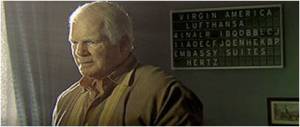
You may have seen some Kayak ads on television in the recent past, but those are relatively new. It’s trademark, visible in the ads, is a board that changes destinations like those old arrival and departure boards in airports and train stations.  Despite the advertising, Kayak has mostly flown under the radar.

Because most of my travel is for work, and we have a corporate travel agent, I use Kayak exclusively to find out what routes exist and what low fares exist.  I have to use my travel agent to book.  I can’t comment on the purchase process on Kayak.

One of Kayak’s great features is that is allows you to easily narrow your travel preferences to focus on your best options, including:

Kayak TV Ad -- The Image of the Destination Board in the Background

  • Your preferred take off and landing times for each leg by sliding a button down a bar – much easier than a drop down box
  • Your preferred airline or airlines or airline alliance (Star Alliance, OneWorld or Sky Team)
  • The total length airport to airport of your flight, including lay overs
  • The length of your lay over (I hate short layovers.  I like at least an hour.)

Kayak lists all the flights in a list and gives you several options to sort.  At first, it shows you just the departure to destination times of all options.  You decide if you want details like the flight numbers, the layovers, the fees, etc. and on which site the price is available. This allows you to do a quick scan of the best options.  I usually sort by total flight time and try to find something near the top of that list.

Another neat feature is that Kayak allows you to find all trip options based on one specific flight.  For example, if I’m traveling from St. Louis to Beijing and back, and I know I want a specific return flight from Beijing, I can find that flight and tell Kayak to show me all itineraries with that return flight.  This feature in particular is one that other sites need to have.  I often want to build my own itinerary, but don’t have that option elsewhere.

For comparison shoppers, Kayak will search five other sites simultaneously, including Priceline and Expedia.  I don’t use that feature much, because I’m so comfortable with Kayak, but I can see where it might interesting to travelers.

Kayak’s hotel search is similar, in that it presents the information in a simple list, letting you decide what details you want to see.  You can narrow the search based on brand of hotel, # of stars, price and amenities or any of many combinations.

Again – Kayak works for me, especially in terms of how quickly I can scan and sort options.  Other sites may work for you.  But, if you haven’t visited Kayak and you tend to research fares, you really should give Kayak a try.

Please Don’t Do This on My Plane Ride

For this week’s travel post, I thought I might run down a few things that I highly recommend you don’t do on an airplane.  I’ve traveled for every job I’ve ever had.  For some, I’ve traveled every week.  I’ve been packed in the center seat between New York and London on a 747 and in first class on a 777 from Berlin to DC.  I’m not afraid, like some, to fly Southwest and remember to get my A boarding pass 24-hours early.

Don’t Show Me Your Bare Feet

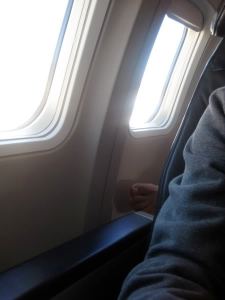
I have no issue with people wearing sandals, flip-flops or other shoes without socks.  I wear flip-flops almost exclusively from May through September, except when I’m at work.  I don’t mind if you slip them off on the plane.  I just don’t want to know.  Don’t cross your legs and put your foot up at armrest level, almost touching me.  And please, please don’t put your bare foot on the armrest when you sit behind me, so that your toes brush against my elbow.  Yuk!  I borrowed the photo at right from my friends at upgrd.com, who experienced something very similar last fall.

Please Don't Do This!

Don’t Bring Smelly Food on Board

Seriously.  No one wants to smell your tuna or your Italian sub.  You don’t think we can?  Bring a PB&J, or chips.  It was awful to smell Lynch Parsons’ liverwurst in 2nd grade, and it’s awful to smell your stuff now.  At least in 2nd grade, I could sit on the other side of the cafeteria.  I can’t move when I’m on a plane.

Don’t Eat Food with Disposable Parts

I wasn’t sure how to name this.  I once sat on a plane from St. Louis to Orlando in an aisle seat.  Right across the aisle from me, a guy ate sunflower seeds the entire trip.  He put one in his mouth, bit it, reached into his mouth to grab the shell, and put the shell on a napkin on his tray.  I appreciate his neatness, but after 45 minutes he had a nice large pile of wet sunflower seed remnants.  It was disgusting.  Don’t do this.  Don’t bring peanuts or anything like this.

Don’t Expect Your Child to Entertain Themselves

I am constantly amazed at the people who travel with kids that bring nothing to keep the kids entertained.  No coloring books.  No toys.  No books to read.  No DVD player.  No nothing.  When was the last time a 5-year-old sat still for an hour?  Never.  As a result, they kick the back of my seat or cry a lot.  I’m a parent of two, and my kids have flown since they were in baby carriers.  My wife, bless her, always prepared for every trip with stuff.  Once, we flew from Baltimore to Honolulu for my sister’s wedding via Detroit and San Francisco.  My kids were 4 and 1 1/2.  My wife packed wrapped presents to be open about every 90 minutes.  My kids didn’t bother anyone.

Don’t Hog the Arm Rest or Think You Can Keep It Up the Whole Trip

This is all about sharing.  You take the armrest for a bit, then I’ll take it, and so on.  I can’t stand it when someone plops down, puts their arms on the armrests,  and doesn’t move for two hours.  Meanwhile, my left or right arm is cramping by the time we land.  (By the way, my wife vehemently disagrees with this.  She thinks the person in the middle seat gets both their armrests as “compensation” for taking that seat.) And for those of you slightly larger that don’t want the armrest down – nope.  You have your space, and I have mine, and the armrest separates that space.  If I sit down, and the armrest isn’t down, it goes down immediately.

Don’t Put Your Baggage Over My Seat, When Your Seat is 20 Rows Back

Your baggage goes over your own seat.  That’s why there’s overhead space above your seat.  The overhead space over my seat is mine.  I’ve actually stopped people from using my space, when I see them do it.  I’m sorry you can’t carry the bag all the way back.  Next time, get a seat farther up front.

Don’t Talk the Whole Trip Behind Me or In Front of Me

I can usually control the conversation in my row.  Sometimes I’m in a talking mood, and sometimes I’m not.  I get frustrated however, when the people in rows around me talk incessantly the whole time.  Rows in coach aren’t that far apart.  Voices carry.  Be sensitive.  Two hours of non-stop chatter gets to me.

Don’t Play Your DVD Without Headphones

You can afford a DVD player but not headphones?  Nothing much more for me to write here.

Don’t Rush Up the Aisle When the Plane Lands

This one kills me.  Where the hell are you going?  Three rows make a difference?  I am amazed when this happens on international flights.  People run up the aisle to save four rows, and they have to go through passport control anyway.  You exit a plan row by row, just like on a school bus.  Be considerate.  When I see someone standing above me that I know came from a few rows back, I stare them down and make sure I get out when it’s my turn.  Sometimes, I’ll even block to let row mates out.

This has been a public service announcement from all the frequent flyers to you infrequent flyers.  Thanks for reading.

What I Learned from Summer Camp

Yesterday at lunch time, my wife and I dragged trunks, backpacks and duffel bags to the JCC here in St. Louis and saw our kids board buses taking them to four-weeks of sleep-away summer camp.  This is my son’s eighth year and my daughter’s fifth.

Where All This Learning Occurred

Our children are carrying on a tradition from their parents and some of their grandparents.  My wife and her mother both went to sleep-away camp.  My dad and I did as well.  I hope some day that my grandchildren will continue the experience.

I went to summer camp from 1974 through 1981, seven of them at Camp Ramblewood located on the Susquehanna River in Darlington, Maryland.  There are some great movies that portray some real aspects of summer camp:  Meatballs, Little Darlings, Wet Hot American Summer, Friday the 13th, and Parent Trap (which is drilled into my subconscious thanks to my daughter).  Ok – maybe Friday the 13th wasn’t based on reality.

We all learned something from those movies, but here are the top 10 things I learned from my eight years of summer camp:

10.  I learned that if you put a normal aerosol top on shaving cream, it creates a fine stream of shaving cream that is perfect for fights.

9.    I learned that it’s possible to stick a fork through your own ear lobe.  This kid named Jeffrey did it one day at lunch, when he impaled himself accidentally while leaning down to pick something up under the table.

Gimp: Does This Exist Outside of Summer Camp?

8.    I learned how create a rat-tail from a towel and put welts on others with a “snap.”  This would have been of great use, had I been cast in Porky’s, but that’s about it.

7.    I learned how to make bracelets out of gimp – in multiple stitches no less.  In the politically correct 21st century, I’m told this is now called “lanyard.”  Does gimp exist anywhere else but summer camp?

6.    I learned how to go commando (and that I didn’t care for it) when Camp Ramblewood lost all my underwear in the laundry in eight weeks.  I can still hear my mother on the phone to camp wondering how a 7-year-old kid can lose all his underwear.

5.    I learned how to do a lot of stuff that I had no opportunity to do elsewhere and have barely done since:  water skiing, riflery, archery, and horseback riding.  I know I haven’t shot a gun since 1981.

4.    I learned how to gamble.  I still owe my friend David Gildenhorn in excess of $2M from a rigged gin rummy game.  How did I ever agree to a progressive game of double or half?  Didn’t I realize I’d never end the debt?

3.    I learned that puppy dog eyes and a mumbled “I have a headache” led to TLC from the attractive infirmary nurse.  (That only worked once a summer, but helped later in life in my social life.)

2.    I learned all there is to know about the birds and the bees.  Conversations with mom & dad?  Nope.  Learn something new in 6th grade health?  No.

1.    I learned independence.  This is important.  Because of summer camp, I easily made the transition to being away from home for college and moving out after graduation.

I’ll add one thing in closing.  I also learned about the ebb and flow of life, about the highs and the lows by going to summer camp.

You see, after first-year jitters in 1974, I eagerly looked forward to camp every year.  I saw the same people from Baltimore, from Philadelphia, and from Cherry Hill, New Jersey each year and went with my friends from D.C.  After 7 years at Camp Ramblewood, I knew the place, the ins, the outs, the rules and how to break them.  Everyone knew me.  Then, in August 1980, just a few weeks after returning from camp, we got a letter in the mail telling us that Camp Ramblewood was closing.  Some of us went to another camp the following year, but it wasn’t the same.  Camp Ramblewood open again a few years later, but is now a corporate retreat.  Bummer.

Perhaps that disappointment makes the memories fonder.  I don’t know.  I do know that I’d go again in a heartbeat, if I could.