Rooting for Athletes With Off-the-Field Problems Without Being Hypocritical

This weekend, we went to see The Other Guys, starring Will Ferrell and Mark Wahlberg.  I’m not spoiling anything to tell you that in the movie a policeman shoots Yankees’ shortstop Derek Jeter after mistaking Jeter for a hooligan.  In one scene, someone yells at the policeman, “You should’ve shot A-Rod.”  That line got a laugh.

I definitely laughed, but I also found myself feeling a bit sorry for Alex Rodriguez.  Here is a guy who just became the 7th person of over 16,000 major league baseball players to hit 600 career home runs.  However, he was reminded the next day that he was a fraud and a cheater, because he used illegal steroids from 2001 to 2003 as a member of the Texas Rangers.  A-Rod admitted the steroid use in February 2009, but that was after he denied using to Katie Couric on 60 Minutes in December 2007.

The Local Reaction to A-Rod's 600th HR

I know the person in the film who yelled that is fictional.  I know it was intended to be a joke and was coincidentally shown the week A-Rod hit #600.  But I also wondered what that fictional person would have said last fall, when Rodriguez hit .356 in the post-season with 6 home runs and 18 RBI to help the Yankees with the World Series.  No doubt Yankee fans who despise Rodriguez’s drug use were excited by his October play, because their beloved Yankees won.

Rodriguez is not the only athlete with an imperfect past.  Philadelphia Eagle quarterback Michael Vick rejoined the league in 2009 after serving jail time for running a dog fighting ring.  Gilbert Arenas of the NBA’s Washington Wizards is about to return to the team after being suspended for most of last season due to a gun-pointing incident in the Wizards’ locker room.  Marion Jones is attempting a comeback in basketball with the WNBA’s Tulsa Shock after serving jail time for lying to investigators and having her track & field medals revoked at the 2000 Sydney Olympics revoked.

If you want to dislike or boo any of these players that’s your right.  I respect that. But I think there are some simple guidelines you need to follow to be fair to them.

I believe a fan is allowed to separate on-the-field activities from off-the-field activities.  You can dislike someone as a person, but cheer for them as an athlete.  You can say with a straight face that the punishment given to Arenas was too light and then cheer when he hits a winning three-pointer for the Wizards.  But, in my opinion, you can’t boo Arenas on the court because of his suspension and then cheer when he hits the winning three pointer.  You can boo a poor play or decision, but you can’t boo him for off-the-court issues and then cheer for his play.  Doesn’t work for me.  It’s hypocritical.

There are parallels here with a corporate work environment.  Imagine if you have an opportunity to hire a talented finance executive, but you learn in the interview process that he served time for auto theft.  If you decide not to hire him because of that, that is your right.  However, once you decide to hire him, his past is irrelevant to his current performance.  It’s over.  Seems fair, right?  You are making a decision to hire him for his finance skills and not for his past.

It’s also hypocritical to say a player should be banned or kicked out of the league and then cheer when they move to your team.  Why do you think no owners are speaking out about the meaning of A-Rod’s 600th home run, when writers and sportscasters are saying it doesn’t count?  Because they know that, if they say anything negative about A-Rod, that he’ll never play for them, and these owners would take A-Rod on their team in a heartbeat.

We should not accept the hypocrisy of fans who vilify a player and boo him on the field for his troubles and then suddenly cheer when that player benefits the team.  Follow the guidelines and be fair.  You can’t have it both ways.
Things About Work I Wish I Knew Earlier – Part 6

In the last two parts, I wrote about not offering suggestions unless you are asked (#4) and about volunteering very sparingly (#5).  In both instances, I wrote that the risk of doing so outweighs the potential reward.  This week, I want to talk about a mindset that is important in reducing the likelihood that you take these risks.

#6 Keep your mind on your own job and only on your own job

I submit to you that high achievers want to be involved in as many things as possible.  They want to learn things, experience things, be asked for their input, be seen as a leader, etc.  There is nothing at all wrong with this.  The more you are with the same company, the more a breadth of functional experience and a breadth of company knowledge can help your career.

When a  high achiever is not involved in or responsible for something, he or she does a lot of watching and a lot of thinking about everything around them.  This is not something that can be turned off.  The thinking is usually starts with what you, the high achiever, would do differently to improve things.  Then, it’s followed quickly by questions or concerns when people aren’t doing what you would have done.  This leads finally to distrust, frustration, and, perhaps any of the actions that put you on the “company radar” for the wrong reasons.

What I didn’t learn early enough is that intellectually controlling the urge to act doesn’t eliminate the preoccupation and the concern and the distraction.  Take heed earlier than I did and stay focused only on your job.  Let’s things go by you without a worry.

It is important at an early stage in your career to realize that many, many things will occur at your company outside your immediate responsibility that seem wrong .  These might include times when:

  • Employees under perform, but keep their jobs
  • Mediocre employees get promoted
  • Special assignments are given to people less qualified than others
  • Decisions aren’t made as quickly as they could be, even when they seem obvious
  • Decisions that seem obvious are decided differently
  • Processes or procedures are used that are less efficient than they should be

The words I’ve chosen in this list imply that you know better and would have done something differently.  If you’ve read parts #1 through #5, you know not to stick your nose in anything outside your area.

The critical next step is to mentally ignore these things.  This post is written very carefully – “Keep your mind on your own job and only on your own job.”  You need to stay focused on your job to do the best you can possibly do.  Giving mind share to these other items can lead to severe distraction and distress and will, inevitably, lead to the action you need to avoid.  Eventually, I believe, if your mind focuses too long on these items, your mouth will open.

When I first realized not dwelling on these types of things is important, I tricked myself to get comfortable by saying two things to myself:  “I don’t care” and “I trust they must know what they are doing.”  When I started doing this, it was as if a big rock had been lifted from my shoulders.  It was wonderful.

(Of course, I care.  And, no, I don’t always trust people.  But I have to act like I don’t care and I do trust.  That’s what works for me.)

If you think about it, most things that occur around you aren’t that important and don’t impact you.  Most things in the above list have happened around you in the past and, despite them, the company hasn’t gone under.  They just don’t matter that much in the long term.  They are frustrating and aggravating, but they haven’t had an impact.  The impact, perhaps, is more on you with your increased blood pressure, distraction and aggravation.

This distraction is not helpful to your career.  It’s not worth it.  It makes no sense.  Keep your mind where it belongs – on your own job.

—————————————-
Previous parts:

#1 Don’t Complain or Make Waves
#2 Don’t Talk Negatively About Anyone Behind Their Back
#3 Don’t Ask Questions in Large Meetings
#4 Don’t Offer Suggestions Unless You Are Asked
#5 Volunteer, But Choose Wisely

In Praise of [name your sport]-Reference.com

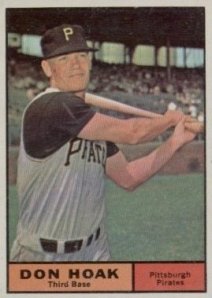
In the movie City Slickers, there is an early scene where one of the wives says, “I’ve been to games, but I don’t memorize who played third base for Pittsburgh in 1960 .”  At that point, the characters played by Billy Crystal, Daniel Stern and Bruno Kirby answer in unison, “Don Hoak.”

This has always stuck with me as the epitome of us guys (and some girls) who can’t remember the date we proposed to our spouses, but can remember absurd sports facts.

Don Hoak - Who Knew?

I didn’t know who played third base for Pittsburgh in 1960.  That’s a bit before my time.  However, I do enjoy perusing a lot of meaningless sports statistics and information.  I’m intrigued by what teams players played for, when they were traded and for whom, what numbers they might have worn and other data.  Before all this stuff was on the Internet, Mrs. Spidey bought me a 10-pound book called “The Official Encylopedia of the National Hockey League,” which listed statistics of every player who ever donned an NHL uniform, including their stats in minor leagues and other countries before and after they played in the NHL.  It was fascinating.

Now you can get all this meaningless, yet fascinating drivel on-line, not just for the NHL, but for major league baseball, the NFL and the NBA.  What do I consider “meaningless, yet fascinating drivel?”  Data varies by league, but here are examples:

  • Uniform numbers worn by every player for every team on which they’ve played. Don Hoak wore #43 for the Brooklyn Dodgers when he first came up, but later wore #7 with the Cubs and then #12 for the Reds, Pirates and Phillies.
  • All signings and trades involving each player, including for whom they were traded and who was chosen by future draft picks.  Don Hoak was traded to the Pirates by the Reds in the same deal with Harvey Haddix, who is known for pitching 12 innings of perfect baseball in 1959 and then losing the game in the 13th inning.
  • Whether each player was an all-star, won an MVP or other award, or ranked in annual statistics. Thanks to Baseball-Reference.com, I now know that Don Hoak was 2nd in the MVP voting in 1960, behind teammate Dick Groat, but ahead of more famous players such as Willie Mays (#3), Ernie Banks (#4) and Roberto Clemente (#8).  In that same year, Hoak was 6th in the league in walks, 9th in on-base percentage, 7th in runs scored,  and 10th in RBI.

Enough about Don Hoak – I think you get the point.

With all the links back and forth, I could live on these sites for a long time.  These are among the few sites for which I might actually carry a laptop into the bathroom to substitute for a book or newspaper.

Here are a few other stupid jersey #  facts to whet your appetite for more:

  • Phil Esposito, who wore #7 for the Blackhawks and Bruins and, later #77 for the Rangers, briefly wore #12 for the Rangers for 76 games in 1976 after being traded. #7 was worn and later retired for Rod Gilbert.
  • Hank Aaron’s first jersey # for the Milwaukee Braves in 1954 was #5, before he switched to #44 for the rest of his career in 1955.  No one on the Braves wore #44 in 1954, and no one other than Aaron would after 1955.
  • Mickey Mantle first wore #6 for the Yankees, before switching to #7 midway through the 1951 season.
  • Michael Jordan wore #45 for the Bulls, upon his return from a year of minor-league baseball.  Bizarrely, he couldn’t wear #23, because it had been retired – for him!
  • Franco Harris, the Hall-of-Fame running back for the Steelers in the 1970’s and 1980’s, finished up with the Seahawks in 1984 where he wore #34, not his traditional #32.  #32 was worn that year by Cullen Bryant.  Go figure.

So – before you click on the links below, please tell your spouse or roommate that you’ll be out-of-touch for a while learning about Reggie Jackson’s time with the Orioles in 1976 and Frank Robinson’s short stint with the Dodgers in 1972, learning which World Hockey Association team Wayne Gretzky played for before Edmonton, and finding out that Bill Russell was actually drafted by the St. Louis Hawks and traded on draft day to the Celtics for Cliff Hagan and Ed Macauley.

Enjoy.  Here are the sites:

Hockey-Reference.com

Baseball-Reference.com

Basketball-Reference.com

Pro-Football-Reference.com

Airline Fees That Could Make A Difference

In yesterday’s New York Times, Susan Stellin has an excellent article about airline fees.  Among other things, Stellin points out how many of the fees that exist are set at levels that exceed a reasonableness test.  For example, ticket change fees, now as high as $150 for domestic tickets, are much higher in today’s online world, than they were in the days of paper tickets.  The effort to change an electronic ticket would not seem to justify a larger fee.

I don’t have a problem with airlines charging fees to offset costs that they incur due to passenger behavior.  For example, airlines have charged for a third piece of luggage or overweight luggage for as long as I can remember.  These fees always made sense to me, because airlines let you bring on two bags already.  More bags could mean more fuel and an added cost.  Those that wanted the plane to carry the weight of their extra luggage should foot some of the cost.  Now that most airlines charge for any bags, this fee is nearly a thing of the past.

I don’t have a problem with airlines charging fees for “extras,” such as food on very short flights, headphones or even premium meals.  If you want better service or more amenities, sometimes you have to pay.  I would include fees to board early in this bucket.

Where I have a problem is when airlines charge for things that make no sense.  Stellin feels this way about stand-by fees, and I agree.  If I am willing to wait in the hopes of getting a seat that would otherwise be empty, why does an airline have to charge?  The plane is flying anyway, with or without me.  If I get on, you have a seat open on the later flight.  If I don’t, then you have done just enough work to put me on the list, nothing more.

Fees should be used directly to influence behavior to benefit the airlines and other passengers.  If you raise the stand by fee, fewer passengers will fly stand-by.  If you increase fees for checked bags, then fewer people will check bags.  With that in mind, here are airline fees I’d like to see put in place immediately that, if enforced, would end stupidity and rudeness and make things flow faster.  By making things flow faster, planes would leave on time, customers would be happier, and the airlines would be happier and more profitable.

If You Don't Have Your ID Out at the Checkpoint, You Pay a Fee Under My Proposal

  1. $50 if you can’t figure out how to swipe your credit card or passport in the ticketing kiosk. Come on!  Push the credit card in and pull it out.  It’s not that hard.
  2. $25 if you do not have your identification out of your pocket before you hand the TSA agent your ticket. You have just stood in line for 15 minutes watching each person show identification to the TSA agent, but it didn’t occur to you to have your ID ready?
  3. $100 if you have to ask the TSA whether water is allowed through security. I am reminded of the TSA agents who shout, “Ladies and gentlemen, water is a liquid.”
  4. $150 if you hang around the boarding area before your row or group is called such that people can’t tell if you are waiting in line or not. Frequent flyers call these people lice.  Just stay seated.
  5. $25 if you try to board a plane before your group or row is called. Listen to the gate agent.  Ask a fellow passenger if you need to.   You aren’t special.
  6. $50 if you have frequent flyer status and try to cut the line after general boarding starts. You know what?  You missed your chance.  You aren’t special either.  Back of the line.
  7. $75 for using an overhead above someone else’s seat when yours is empty – paid directly to the passenger whose space you took. If only.
  8. $75 for not heeding a flight attendant’s request to put one bag in the overhead and one under your seat and, instead, putting both bags above your seat. Again, you aren’t special.  You are one of many travelers on that flight.
  9. $150 for putting both bags up top, hoping space will stay available and not removing one when the flight attendants say there is no more space and ask again. These people are really quite special, but not in a good way.
  10. $50 for running up the aisle upon landing and not waiting patiently to disembark. I’ve written about this before.  This one boggles my mind.  Where are they going?
  11. $100 for stopping right at the end of the jet-way upon exiting to get your bearings. When you do this, you hold up the line.  Get yourself clear of the gate, and then stop to look around.  You know you are in an airport.  You aren’t lost.

Lastly, I’d add two new baggage fees:

  • $100 per bag (in addition to regular checked baggage fees), for any carry-on bag that makes it on the plane, doesn’t fit in an overhead bin or beneath the seat, and has to be checked.
  • $150 per bag (in addition to regular baggage fees) for any bag checked by a passenger who ignores the flight attendant’s warning that “there is no more overhead space” and continue down the aisle with their bag.

All of this is easily administered, as the airlines have our credit card on file.

Unfortunately, it makes too much sense to implement.

Lamenting the Disappearance of Kids’ Summer Vacation

Am I the only one, or has everyone else noticed that many kids’ summer vacations have disappeared?

I’m not referring to the trimester system that lacks a summer vacation at all.  I’m referring to the fact that between academics and extra-curricular activities occurring year-round, kids no longer get any time off.  And, if they do take time-off, they can be punished.

I got to thinking about this while reading about the conflict between the Washington Redskins and defensive lineman Albert Haynesworth, the Redskins’ highest-paid player.  Haynesworth is not allowed to take part in team training camp practices until he passes a fitness test.  He must pass the fitness test because he did not participate in the Redskins’ off-season conditioning program.   He was, in fact, the only Redskin that did not participate in this program.  Interestingly, the program is not mandatory; it’s voluntary.  Nonetheless Haynesworth is being singled out for not attending.

Haynesworth’s plight (for which I have no sympathy as he pocketed a $21 million bonus check on April 1) is, unfortunately, not dissimilar from situations encountered by school age kids today.  The difference is that Haynesworth is paid to focus on football year-round.  Kids in school are not paid, but can still suffer similar consequences if they decide not to participate in off-season activities.

It used to be that summer school was populated by those that failed courses in the prior year.  It used to be that the football team would start practicing a few weeks before school started, and the marching band would go to band camp for a week in August.  It used to be that only outstanding athletes would play their sports year-round.  Not any more.

And it’s a shame.

Instead of going to summer camp or hanging at the pool or getting a job, more and more kids are giving up their vacations to get ahead in academics or get ahead in sports.  Many times, like Haynesworth, they seem to have a choice, but really don’t.

If Only Today's Kids Experienced What Calvin Did

In our school district, if students want to take advanced electives junior and senior year to have on their resumé for college applications, they must first take the intro courses.  To find room for the intro courses, they have to complete required courses.  When do they complete those required courses?  In summer school.  If they don’t do this and don’t take more advanced courses, they’ve reduced their chances of getting into top schools.

The competitiveness and complexity of sports have driven many schools to have summer practices or camps.  Like the Redskins, these camps are “voluntary.”  Like the Redskins, players can be “punished” for not attending, in that they’ll be well behind the rest of the team.  Unlike the Redskins, however, many of these practices or camps charge a fee to attend because they are off-season.  What a double-whammy for kids and parents!

Kids and parents are then forced to make difficult choices.

What are the implications for not attending those mandatory voluntary hockey practices in July to go on a family vacation to celebrate your grandparents’ 50th wedding anniversary?  Will the player fall behind, get demoted to JV, or get banished from the team entirely?

What if your daughter skips the 2nd week of cheerleading practice to attend summer camp with the same girls she has for the past 8 summers?  Will the coach really kick her off the squad?

I understand the coaches’ desire to win.  I understand, therefore, why varsity basketball teams play in summer leagues together, why cheerleading teams have eight-hour choreography sessions in mid-July, and why football teams are on the field all summer.  It’s a zero-sum game.  Once one team does it, they all do.

I also know times are different.  Back in the day, all pro athletes has off-season jobs.  Yogi Berra was once the head waiter at an Italian restaurant here in St. Louis.  Mickey Mantle spent a summer in the mines near his home of Commerce, Oklahoma.  Football star Jim Brown was once a marketing rep for Pepsi.  Now, athletes are paid to focus on their sport all year.

Of course, kids are not paid to focus on their sport or on academics all year.  In fact, they aren’t paid at all.

Let’s give them their summer vacations back and let them enjoy the peaceful summers like we did.  They’ll join the rat race soon enough.  Why push them there now?

Overcoming Your Brain’s Barrier to Dieting

There is a concept in pop psychology called hyperbolic discounting.  Hyperbolic discounting is the notion that we value things today about twice as much as we value things at any point in the future, from tomorrow to ten years from now.  Hyperbolic discounting is also the scientific reason why we are always going to start dieting and exercising tomorrow.

When we start to consider dieting, we always pick a point in the future to begin.  It might be the day after a vacation or New Year’s Day or the day you will get your first NutriSystem or Jenny Craig food in the mail.  More simply, you might decide at lunch that as of dinner (four to six hours away), the diet begins.  You may even have a last meal in anticipation of the diet.  However, we never decide to go on a diet just as the waitress brings the bacon cheeseburger or right after we order Domino’s or just as the Baskin Robbins scooper hands us our double cone.  It is always as a point in the future.

Hyperbolic discounting explains why.  We value the effort required to diet in the future at about half the effort required in the present.  Somehow, we have to have the slice of cheesecake now, but we can easily avoid it next week.  It’s a brilliant concept really. And it makes sense.  More people decide to diet on Sunday night, only to blow it at breakfast on Monday morning when they have to put in double the effort to eat Puffed Wheat and not Captain Crunch.

The same notion can be used to explain why we decide at night to exercise in the morning, but then in the morning decide not to get out of bed.  Somehow it’s a lot harder to get out of bed at 5am than we thought it would be when we set our alarm.

Our brains know how to diet, and our brains know how to exercise.  I don’t think we need books to tell us what to eat or how to exercise.  We use books and web sites to give us easy to understand plans and schedules so that the effort required to diet and exercise is reduced.  Then we can overcome the hyperbolic discounting that we have already done.  If we have the plans and menus in place today, it won’t be any easier in the future than it is today, and we will start now.

One Way to Overcome Hyperbolic Discounting

This morning, I overcame hyperbolic discounting.  First, I made sure that there was no extra effort required to start a diet and exercise regimen anew.  The treadmill repairman had fixed our Nordic Track in the basement.  We had plenty of Honey Nut Cheerios, fat-free milk, apples and Zone bars on hand in the house.  I have no client dinners or social events planned the whole week.  Even better, Mrs. Spidey had a book club meeting tonight, so I could plan my dinner.  All was perfect.

But then, at 5:45am this morning, hyperbolic discounting hit me square in the face. I had planned to exercise at 5:00, but I slept through my alarm.  My mind immediately said, “Tomorrow, it will be a lot easier when you get up at 5:00.  5:45 is too late.”   Somehow, however, I pushed through.  I told myself that I had to get going, that I could work late or work in the evening to make up the time.  Once I got my workout clothes on and made it to the basement, I was fine.  I applied the effort today, despite my brain telling me it would be easier tomorrow.

Long story short, it was time for another diet, and it’s underway.  I reprogrammed Lose It on my iPhone.  I commit to tracking it here every Monday, come good or come bad.  I weighed in this morning at 197.4.  Ouch.  By Christmas, I’d like to be close to 180.

Scientifically, I know my brain is telling me that it will be easier than it will actually be.  Perhaps knowing how my brain works will make it a bit easier?  Stay tuned.

Baseball Owners, Why are You Helping the Yankees?

I am a die-hard Yankees’ fan. As a Yankees fan, I’m excited by their pick-ups before the July 31 non-waiver trade deadline, but I am very surprised by what was exchanged in the deals.

Typically, when you see a team make a trade to pick up an impact player, they have to give something up.

Here in St. Louis, the Cardinals had to do just that, giving up starting right fielder Ryan Ludwick to get starting pitcher Jake Westbrook, whom the Cardinals believe will complete their rotation through the end of the season.  Ludwick was a Silver Slugger winner in 2008 and was hitting .283 with 11 HR and 43 RBI at the time of the trade.  More importantly, perhaps, Ludwick was, by all accounts, an exceptionally positive force in the Cardinals’ clubhouse.  Westbrook is a sub-.500 career pitcher, who is 6-7 with a 4.65 ERA in 2010.  The Cardinals wanted him, however, so they had to give up value.

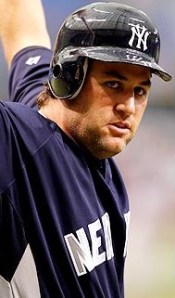
Lance Berkman in His New Yankees Uniform

In Los Angeles, in order to get Ted Lilly for their rotation, the Dodgers had to give up their starting second baseman, Blake DeWitt, and two minor leaguers.  DeWitt is only 25, has a .980 fielding percentage at second base, and was hitting .277 at the time of the trade.  For this up-and-comer, the Dodgers got Lilly, 3-8 with a 3.69 ERA this year and a free-agent at the end of the season, and Ryan Theriot, the Cubs starting second baseman, a bit older than DeWitt and hitting .283 with only 21 RBI when traded.  To compensate the Dodgers for the loss of a potential superstar, the Cubs also shipped the Dodgers $2.5M to cover some of Lilly’s remaining salary.

To their credit, the Yankees picked up three strong role players for their stretch run:

  • Lance Berkman from the Astros, a switch hitting first basement and designated hitter. Berkman is a career .296 hitter, a five-time all-star, and a good first basemen with a fielding percentage of .995 in 2009.
  • Austin Kearns from the Indians, a steady outfielder and possible designated hitter. Kearns is a lifetime .258 hitter, but he was hitting .272 at the time of the trade and has a career .986 fielding percentage playing all three outfield positions.
  • Kerry Wood from the Indians, who will be given the opportunity to take on the 7th or 8th inning set up role for closer Mariano Rivera. Wood is having an unremarkable season and is just off the disabled list, but consistently has more strikeouts than innings pitched throughout his career.

Unlike the Cardinals and Dodgers, however, the Yankees didn’t give up a single player on the major league roster:

  • For Berkman, the Yankees gave up a AAA relief pitcher Mark Melancon, who has appeared in a total of 25 major league games in his career, and Jimmy Paredes, a minor league shortstop at the A level.
  • For Kearns, the Yankees traded a “player to be named later.”
  • For Wood, the Yankees traded a “player to be named later” or $500,000, if the Indians decide against a player

    Kerry Wood Pitches in His First Yankees Game

Let’s delve a bit deeper into the trades.  The Astros also gave the Yankees $4 million towards Berkman’s remaining 2010 salary of $5.5 million and a $2 million buyout.   The Indians also gave the Yankees $2,172,131 towards Woods’ remaining 2010 salary of $3,672,131.  The Indians did not give any money along with Kearns, but, then again, his entire 2010 salary is only $750,000.

I find this amazing.  The Yankees already have the largest payroll in the major leagues ($206 million in 2010), the most revenues (between $450 and $500 million in 2009), and likely turned a profit even with other operating costs.  Yet the Astros, with $189 million in 2009 revenues, and the Indians, with $170 million in 2009 team revenues, both sent the Yankees money.

Why?  Rational economics suggest the Astros must want to save the $3.5 million they will with Berkman, and the Indians must want to save the $1.5M they will with Woods. The other possible answer is that Yankees’ competitors are in such poor economic shape that they can’t afford the $3.5 million the Yankees will pay Berkman and the $1.5 million the Yankees will pay Woods.  I find either difficult to believe.  All deals end in 2010, so there is no savings or extra payments beyond this season.

In the end, Yankees gave up very little to make themselves much stronger for the stretch run.  ESPN, NBC Sports, Yahoo! Sports, and Sports Illustrated all list the Yankees among the trade deadline “winners.”  In my opinion, they were basically paid to take these players.  Could the Jimmy Paredes for Lance Berkman deal work out as poorly for the Yankees as the Curt Shilling for Glenn Davis deal did for the Orioles back in 1991?  It’s possible, but it will take years to know.

For all the complaining about the lack of a salary cap and complaining about how the Yankees buy championships, I’m amazed that other teams are willing to ship the Yankees money to help them make their team better on another championship run.  To me, it doesn’t make sense.  Good for Brian Cashman, Joe Girardi and the Yankees.  Shame on the rest of the league.